A Complete guide to the History, Design and Meaning behind the Uganda Flag
The national flag of Uganda stands out as one of the most recognizable African flags with its 6 horizontal black, yellow and red stripes plus centered crested crane. The flag was adopted on 9th October, 1962 when Uganda gained independence from Britain and has since been used as a representation of Uganda’s identity, values and aspirations.
What does the Uganda flag look like?
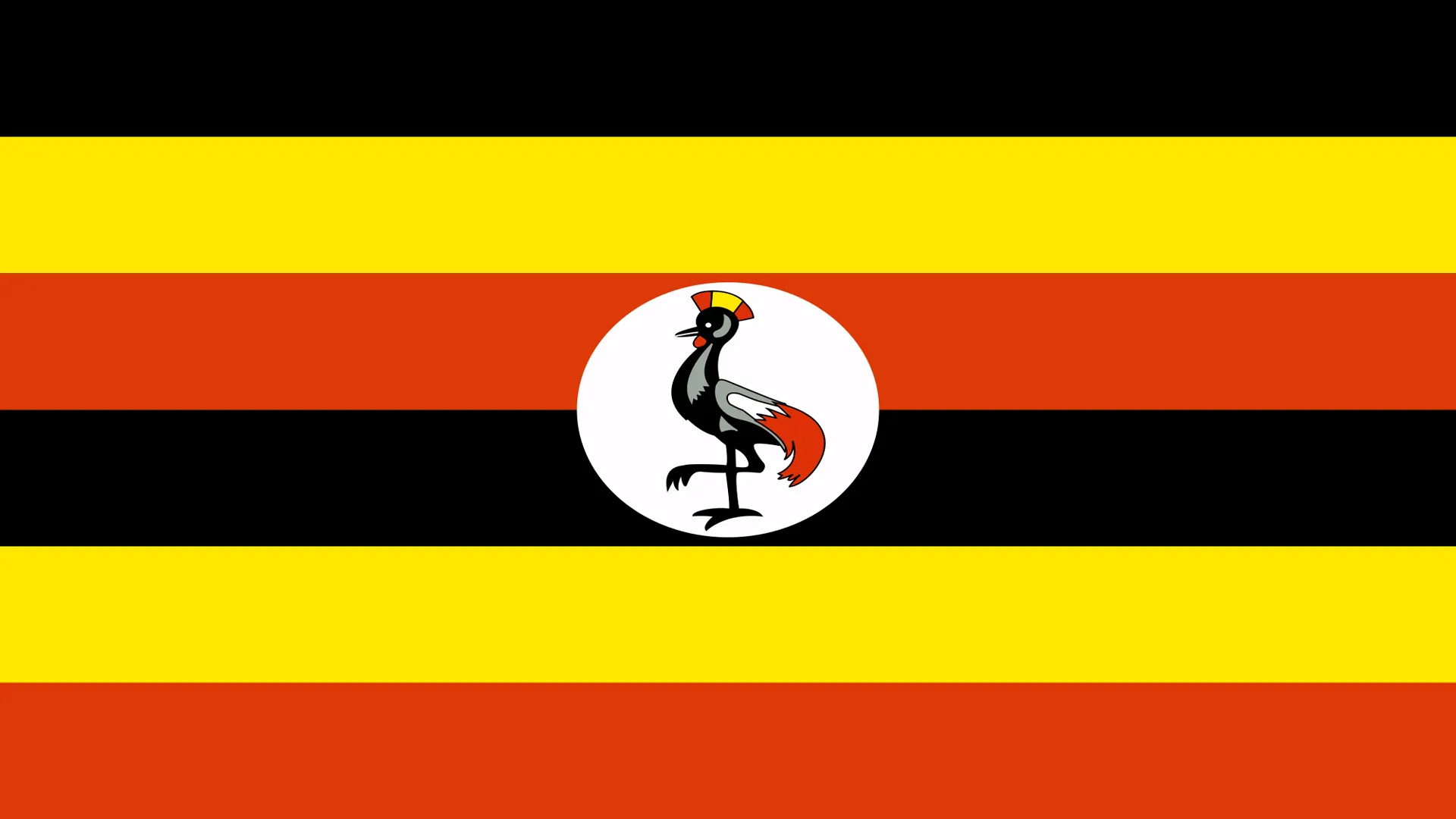
The flag of Uganda features black, yellow and red stripes(stated as they appear from top to bottom). At the centre of the flag is Uganda’s national bird; a grey-crowned crested crane facing the hoist’s side standing with a raised leg.
What is the meaning of the colors on the Uganda flag?
The Uganda flag features 3 colors namely black, yellow and red. Each of these colors is meant to represent a different aspect about Uganda as a country and the African continent.
- Black: Symbolizes the common heritage of the people of Uganda and Africa as a whole.
- Yellow: Stands for Africa’s abundant sunshine which is available all year round
- Red: Symbolizes brotherhood. Since red is the color of blood, it symbolizes the brotherhood amongst Ugandan people and fellow africans at large.
What does the Crested crane on the Uganda flag symbolize?
The grey-crowned crested crane in the center of the flag is Uganda’s national bird. The bird carries several meanings:
- Its gentle nature is a representation of the character of the people of Uganda
- The crane is depicted with a raised leg to symbolise Uganda’s forward progress as a country
- The crane was also the military badge of Uganda’s soldiers during colonial rule. Its use on the flag therefore depicts historical continuity from colonial times to independent governance.
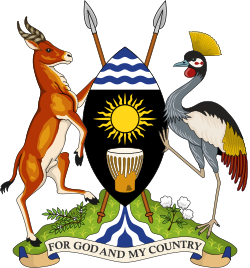
The crane also features on Uganda’s Court of Arms.
Who designed the Uganda flag?
The flag was primarily designed by Grace Ibingira, who served as Uganda’s Minister of Justice at the time. Ibingira was not only a politician but also an accomplished artist.
However, there is also mention of C. Todd, a then Professor of Fine Art at Makerere University, who contributed to the design and also created Uganda’s Coat of Arms.
The flag was based on the colors of the Uganda People’s Congress (UPC) party, which came to power in elections held on April 25, 1962, just months before independence.
.webp)
Background behind the current flag of Uganda
The current flag came into being through political changes. When the Uganda People’s Congress (UPC) won the national elections on April 25, 1962, defeating the Democratic Party, the newly elected government rejected the provisional flag design that had been proposed earlier by the Democratic party.
According to historical accounts, the manufacturers (Messrs Porter Bros.) advised that the green color on the provisional flag would fade quickly under Uganda’s hot sun, and the blue didn’t represent anything particularly Ugandan. Some also believe political rivalry played a role in the change.
On May 8, 1962, the UPC/KY cabinet appointed a committee chaired by Grace Ibingira to design a new flag. The committee included:
- Dr. E.B.S Lumu (Health Minister)
- Adoko Nekyon (Information Minister)
- Cuthbert Obwangor (Regional Administrator)
At a full cabinet meeting on May 16, 1962, the current flag design was selected. The British colonial administration approved the flag before Uganda’s independence on October 9, 1962.
History of Uganda’s flags before independence
Buganda Kingdom Flag (Pre-Colonial Era)
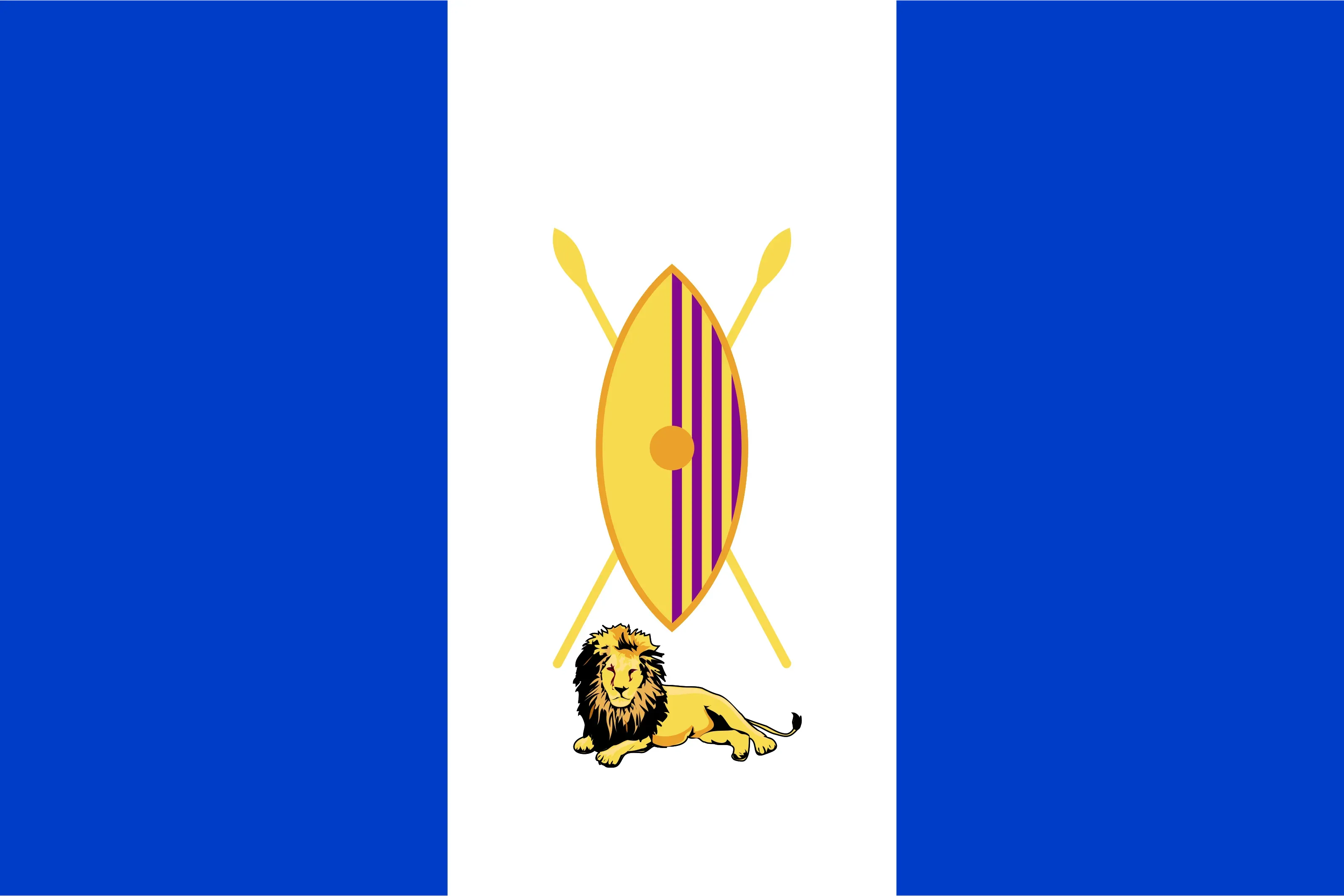
Before British colonial rule, the Kingdom of Buganda was one of the few precolonial African states with its own flag. Historical records from explorer Frederick Lugard’s 1892 visit describe the Kabaka (King) of Buganda flying “an enormous home-made flag, two lances and a shield on a red ground.”
During the colonial period, the Buganda Kingdom continued to use a flag featuring a red background with a shield and two lances or spears. Today, the modern Buganda Kingdom uses a blue-white-blue vertical tricolour with the shield and two-spear emblem in the middle.
Uganda Protectorate Flag (1914 - March 1962)
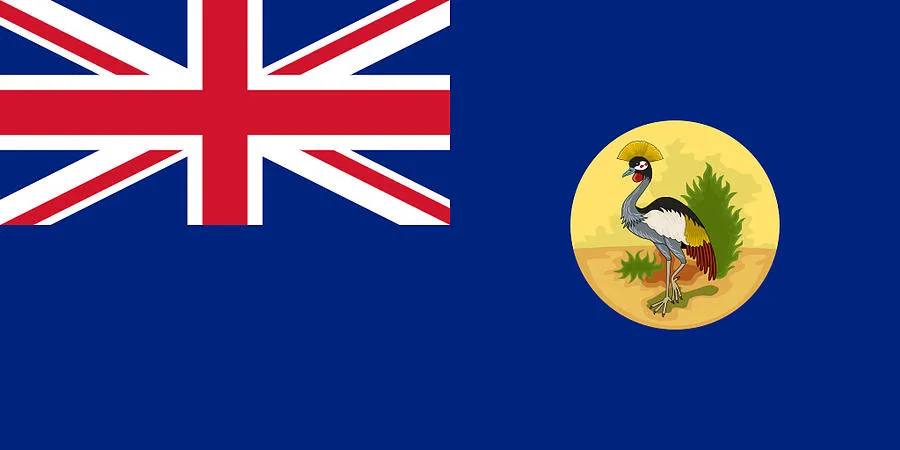
When the Uganda Protectorate was established in 1894, the British initially used the Union Jack. In 1914, Uganda adopted an official flag following British colonial regulations from 1865. This flag was a British Blue Ensign with:
- The Union Jack in the upper left corner (canton)
- A white disc on the fly side containing a grey crowned crane
The British selected the crane as a neutral symbol to avoid showing favoritism to any particular kingdom within the protectorate, as the region contained several traditional kingdoms including Buganda, Bunyoro, Ankole, and Toro.
The Provisional Flag (March - 9th October, 1962)
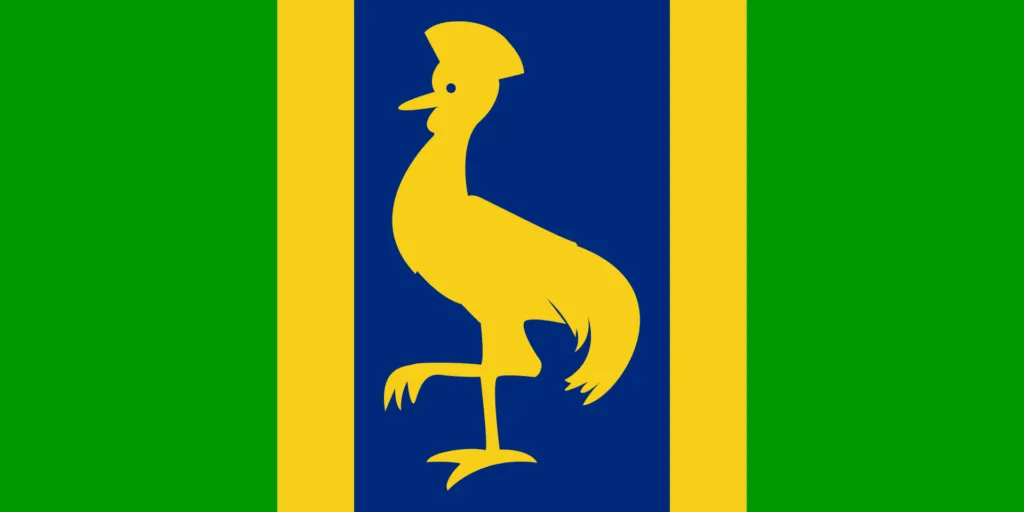
In March 1962, the ruling Democratic Party (DP) proposed a national flag to replace the colonial flag. This design featured:
- Vertical stripes of green-blue-green
- Narrow yellow stripes separating the main colors
- A silhouette of a yellow crane in the center, facing the hoist side
The colors reflected the Democratic Party’s identity, with green as the party’s primary color. However, this flag was short-lived and never officially adopted
Other lesser known flags that were used during colonial rule include the following:
-
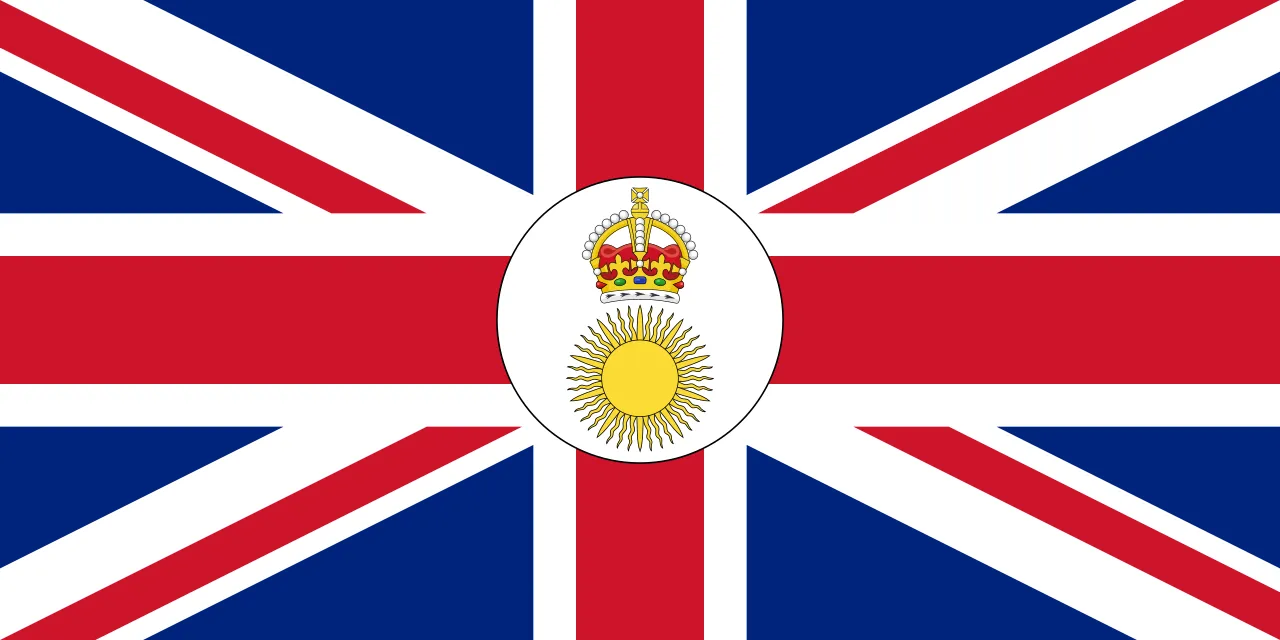
The flag of the Imperial British East Africa Company(1888 -1894)
-
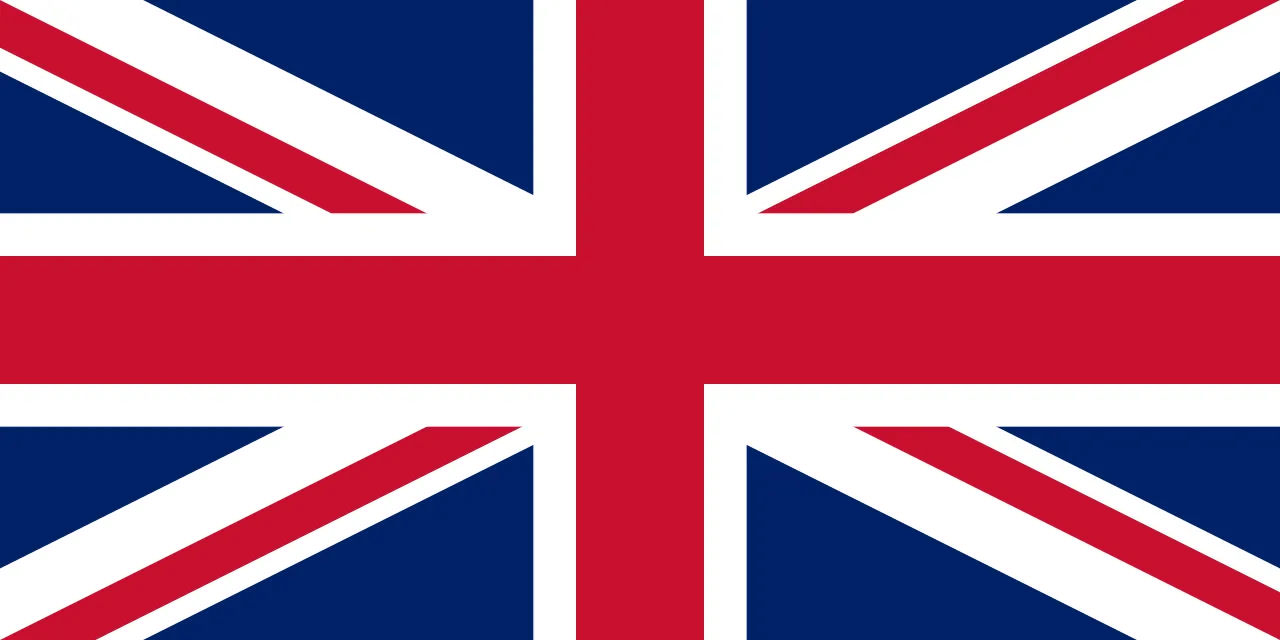
The flag of the Uganda Protectorate(1894 -1914)
-
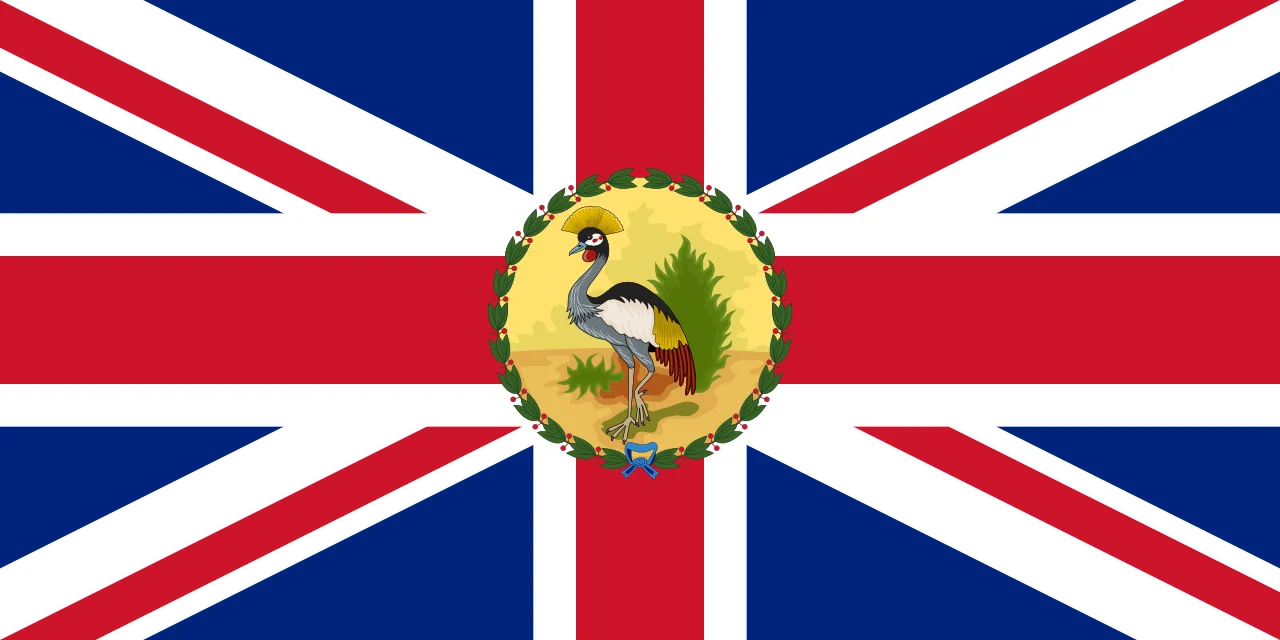
Standard of the governer of Uganda Flag(1914 - March, 1962)
Other flags that represent Ugandan Institutions
Uganda People’s Defence Force (UPDF) Flag
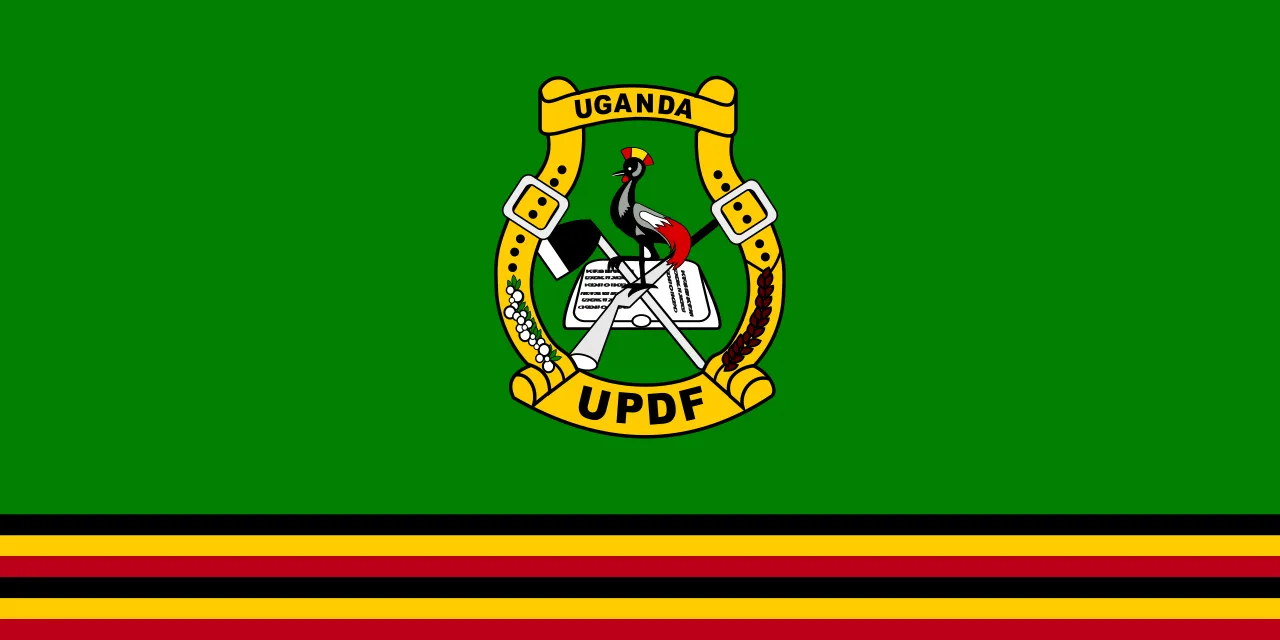
Uganda’s official army is known as the Uganda People’s Defence Force (UPDF). It evolved from the National Resistance Army in 1995 and has its own distinctive flag. The current UPDF flag features:
- A dark green upper part
- The UPDF logo in the center of the upper green section
- Six horizontal stripes in the national colors (black, yellow, red, black, yellow, red) along the bottom edge
The UPDF consists of Land Forces, Air Forces, Special Forces Command, and Reserve Forces.
Uganda Land Forces flag
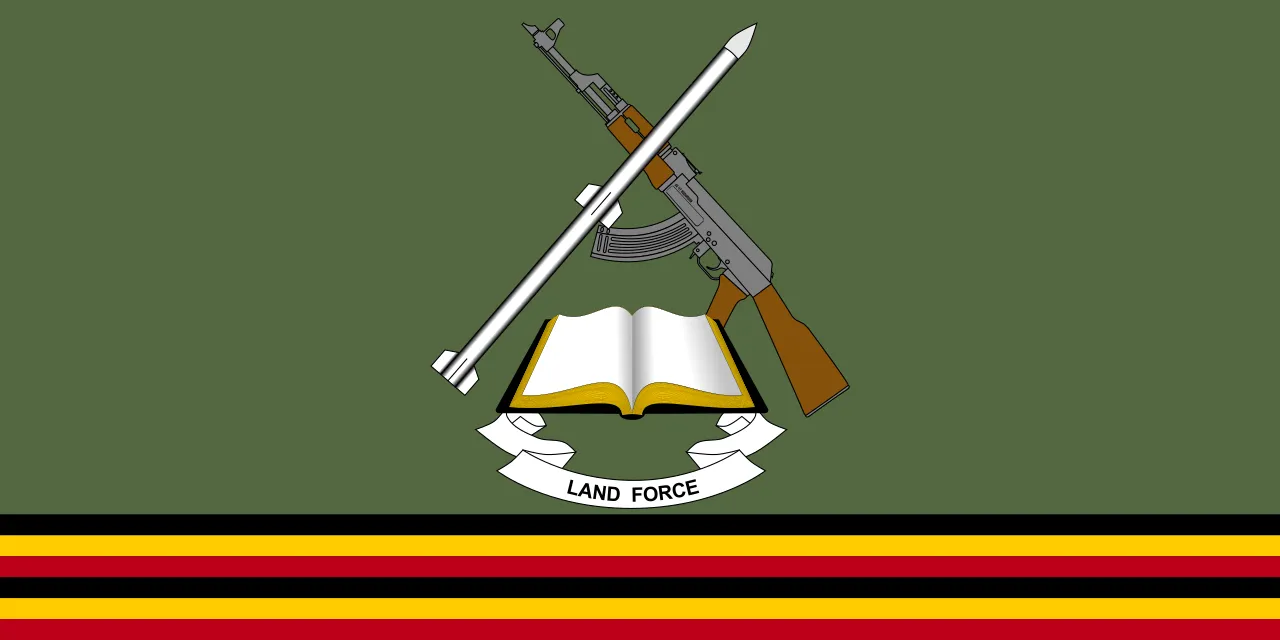
The Land Forces have their own flag representing the land component of Uganda’s army. The Land Force’s mission is to protect Uganda’s sovereignty and territorial integrity.
Uganda People’s Defence Air Force Flag
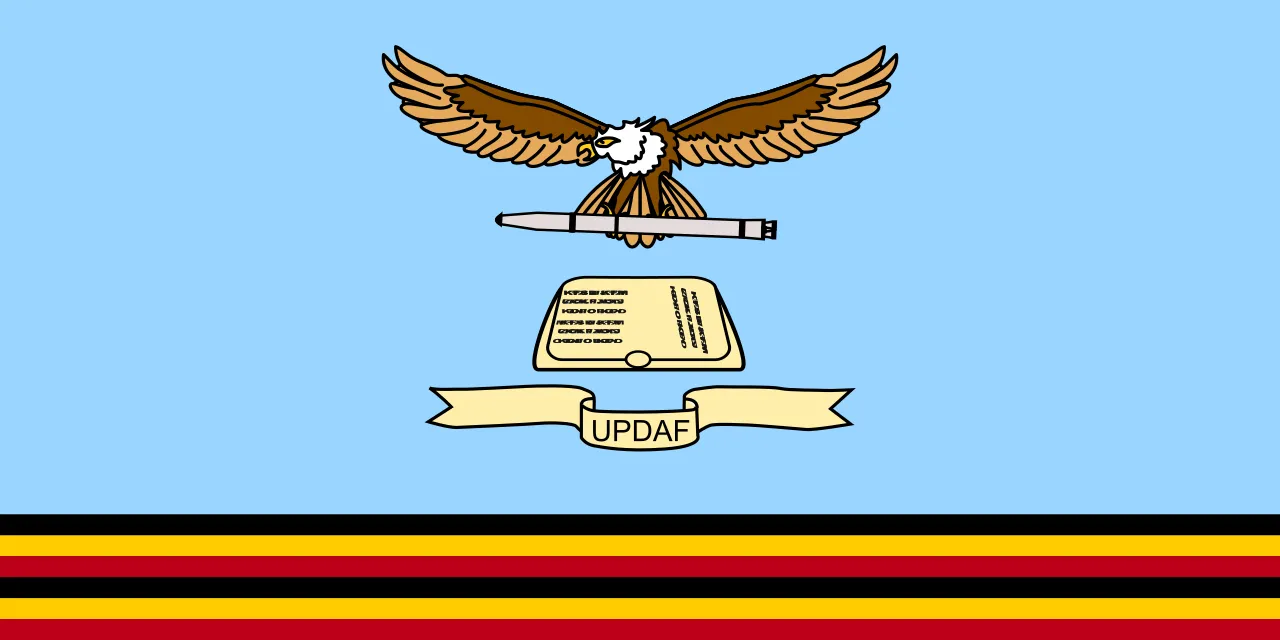
The Air Force maintains a separate flag for its operations. Their mission is to defend Uganda’s airspace and provide air support to the Uganda Land Forces.
Presidential Standard of Uganda
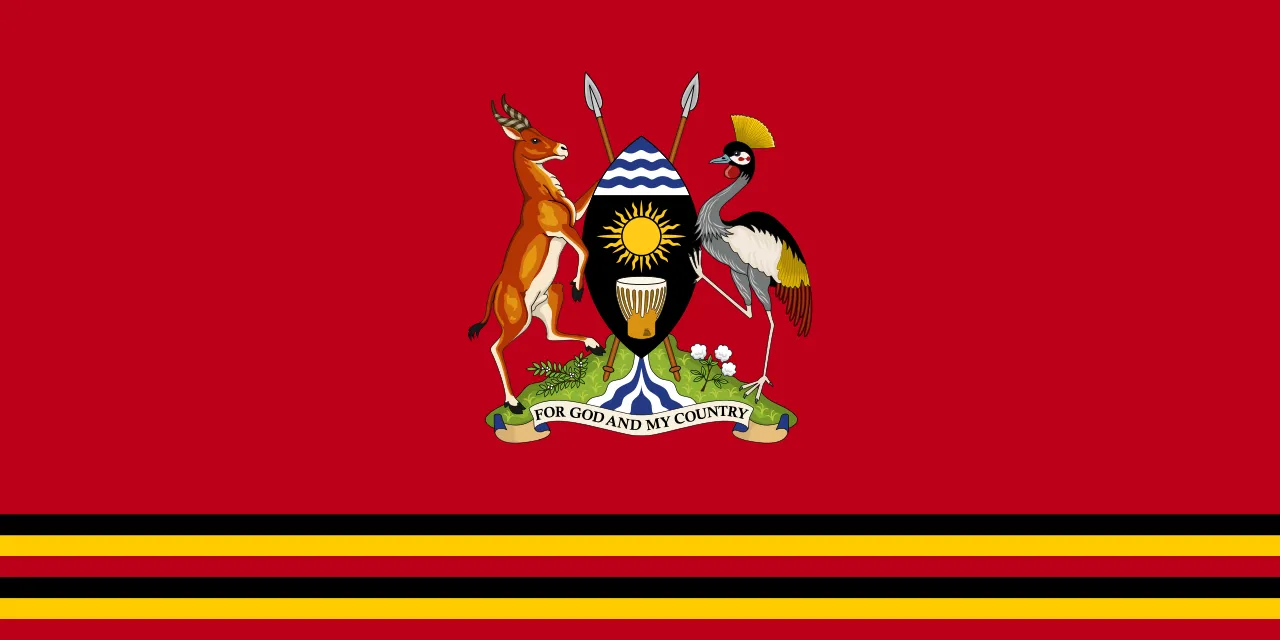
The Presidential Standard is a special flag used to represent the President of Uganda. This flag is flown when the President is present at official locations or events. The Presidential Standard Act of 1963 established the specifications for this flag.
Interesting facts about the flags in Uganda
-
Idi Amin’s Theft: During his rule and subsequent exile, dictator Idi Amin reportedly stole the original flag, coat of arms, and other national symbols and took them to Saudi Arabia. Uganda officially requested Saudi Arabia’s assistance in recovering these items however up until this day, the items have never been recovered.
-
Regional Kingdoms: While Uganda is now a unified nation, several traditional kingdoms within the country still maintain their own flags, including Buganda, Bunyoro, Ankole, Toro, and others. These kingdoms have cultural significance but no formal political power.
-
Acholi Flag: The Acholi people in northern Uganda have their own flag featuring an elephant (their national animal) in the center, with brown, green, and blue stripes representing the region’s fertility, vegetation, and water bodies.
-
Legal Status and Flag Protocol: The flag is protected by the Ugandan National Flag and Armorial Ensigns Act 1962 (Chapter 254), which outlines proper usage and display of the national flag:
- The flag must always be respected and flown higher than or equal to other flags in thr country
- The flag is flown at full mast on October 9th every year to commemmorate Uganda’s independence.
- Disrespect and Desecration of the flag is prohibited.
Frequently Asked Questions about the Uganda Flag
Who designed the Uganda flag?
The Uganda flag was designed by Grace Ibingira who served as Uganda’s Minister of Justice at the time.
Who designed the Uganda Coat of Arms?
The Uganda Coat of Arms was designed by C. Todd who was a fine arts professor at Makerere University at that time.
Who is the designer of the Uganda National Flag?
Grace Ibingira was the designer of the Uganda National Flag
What flag did Uganda use before independence?
Uganda used multiple flags before independence. These included the Uganda Protectorate flag which was used from 1914 up to March, 1962, the Provisional flag used from March, 1962 to October 1962. The Provisional flag featured vertical stripes of green-blue-green and a silhouette of the Crested Crane standing in the center with one leg raised up.
What is the meaning behind the Uganda Coat of Arms?
The Uganda Coat of Arms features various items each with a unique meaning:
- Shield and Spears: Willingness of the Ugandan people to defend their country
- Waves of Lake Victoria and Lake Albert: Vast water bodies(lakes and rivers) throughout the country which make Uganda’s main economic activity; farming possible
- Sun: Uganda is situated along the equator and experiences bright sunshine all year round
- Drum: Dancing and summoning people to attend meetings
- Crested crane on the left: This is Uganda’s national bird. It appears on the Uganda flag as well
- Uganda Kob on the right: Abundant wildlife
- The shield stands on a green mound to represent Uganda’s fertile soil
What bird is on the Uganda flag?
The crested crane is the bird which appears on the Uganda Flag. It is Uganda’s national bird and appears on the Uganda Coat of Arms as well.
What 3 colors appear on the Uganda flag?
Black, Yellow and Red are the 3 colors which appear on the flag of Uganda
Conclusion
The history and design of the Ugandan flag reflects the nation’s journey from colonial rule to independence and its ongoing development as a sovereign African state. Every part of the flag is tells a story about Uganda’s heritage, values, people and aspirations.
Planning a trip to Africa? Explore our expertly curated tour packages to experience the incredible wildlife, stunning landscapes, and warm hospitality that make Uganda truly the Pearl of Africa.
Interested in what else Uganda has to offer, check out the rest of our travel guides: