History, Design, Meaning and Symbolism behind the Uganda Coat of Arms
From currency notes to passport covers and Parliament’s grand halls, the Uganda Coat of Arms stands out as one of Uganda’s most prominent symbols both locally and on the international stage. This guide delves into the emblem’s history, design, symbolic meaning, and enduring significance to Uganda’s national identity.
History and Adoption of the Uganda Coat of Arms
The Uganda Coat of Arms was approved by Sir Walter Coutts, then Governor of Uganda, on October 1, 1962, and was officially adopted by law on October 9, 1962, when Uganda gained independence from the United Kingdom.
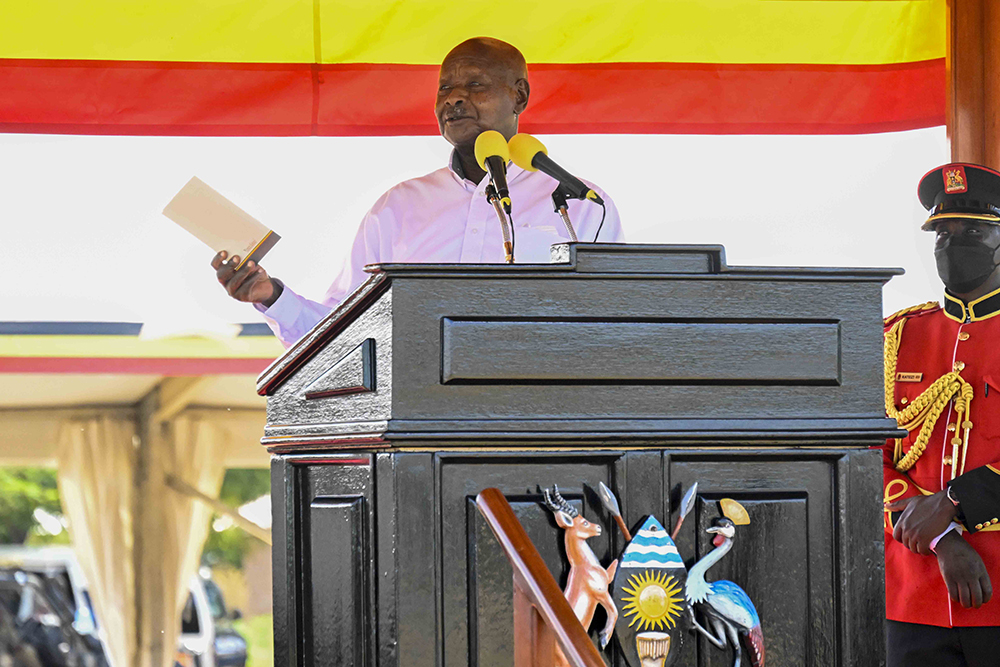
Prior to Independence, Uganda existed as a British Protectorate without a distinct national emblem. As the march towards self governance gained momentum, Prime minister Benedicto Kiwanuka constituted a National Symbols Committee in charge of creating symbols that would represent the soon-to-be independent nation. This committee headed by Professor Ssenteza Kajubi placed advertisements in local newspapers such as Uganda Empya, Uganda Eyogera, and The Herald, as well as on Radio Uganda and Uganda Television, inviting Ugandans to participate in competitions to design the national flag, motto, anthem, and coat of arms.
Historical Timeline of the Uganda Coat of Arms
- 1894-1962: Uganda exists as British protectorate without distinct national emblem
- Early 1962: National Symbols Committee established to create national identity symbols
- October 1, 1962: Coat of arms approved by Governor Walter Coutts
- October 9, 1962: Formally established by law on Uganda’s Independence Day
Who designed the Uganda Coat of Arms?
The Uganda Coat of Arms was designed by Professor Cecil Todd who was a Professor in the Margaret Trowell School of Industrial and Fine Arts at Makerere University. He was the artistic director of the National Symbols Committee and is largely credited, along with Grace Ibingira for the design of the Uganda Coat of Arms.
Meaning and Symbolism behind the Uganda Coat of Arms
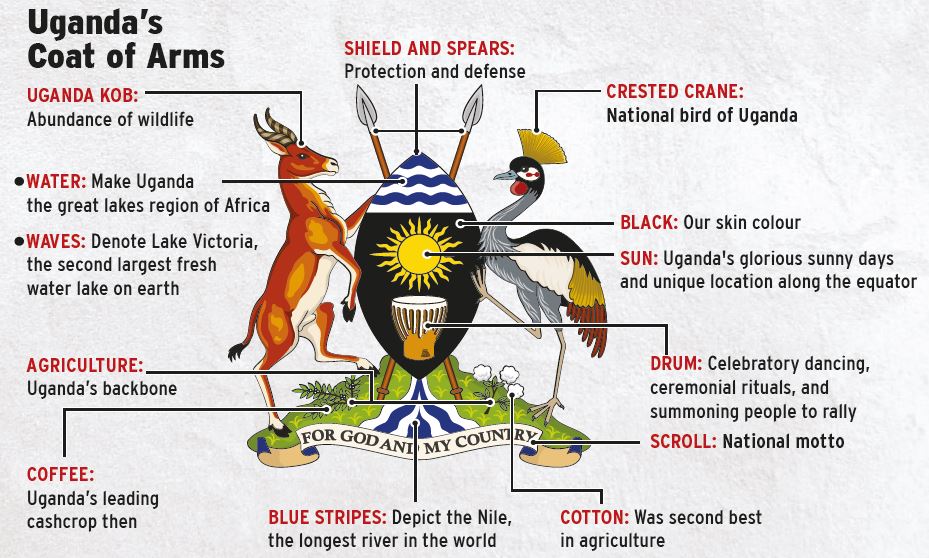
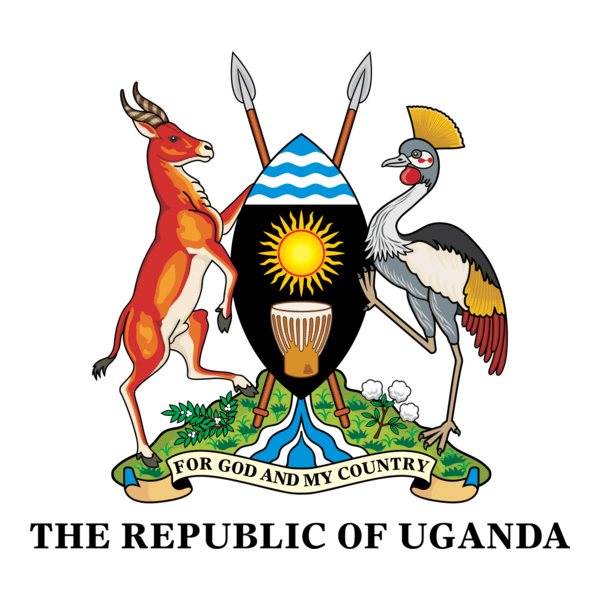
Every element of the Uganda coat of arms carries deep symbolic meaning, representing different aspects of the nation’s identity, culture, heritage and natural wealth.
Shield and the Spear
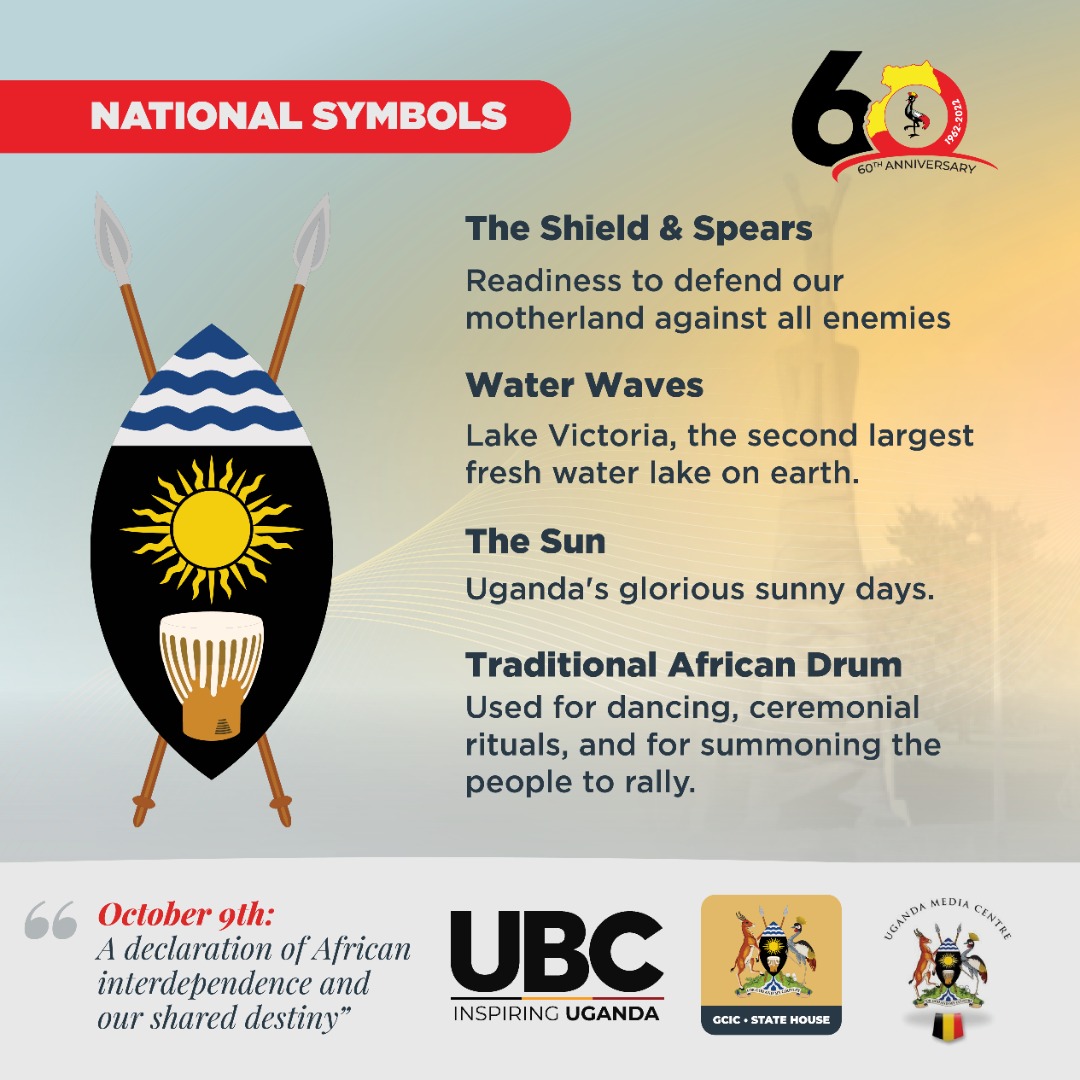
At the center of the Uganda Coat of Arms stands a traditional African shield with two crossed spears behind it. The shield and spears represent the willingness of the Ugandan people to defend their country.
Elements on the Shield
The Waves
At the top of the shield are wavy blue and white lines which represent Lake Victoria, the second largest fresh water lake in the world. This water body is vital to Uganda’s economy by enabling activities such as Agriculture and fishing.
The Sun
At the center of the shield is a shining sun representing the all year round sunshine enjoyed by Uganda as an Equatorial nation.
The Traditional Drum
At the bottom of the shield sits an African Drum symbolizing the traditional practice of using drums to summon people for meetings and ceremonies.
Historically, the drum also represented the royalty and the authority of Uganda’s kings, though this interpretation was altered during the political upheavals of 1966 when then Prime minister Apollo Milton Obote successfully captured power from then president and king of Buganda Edward Muteesa II. Following this military coup, he abolished all kingdoms and chiefdoms throughout the country.
The Supporters of the Shield: Crested Crane and Ugandan Kob
Supporting the shield on either side are two animals: A Ugandan Kob on the left and the Crested Crane on the right.
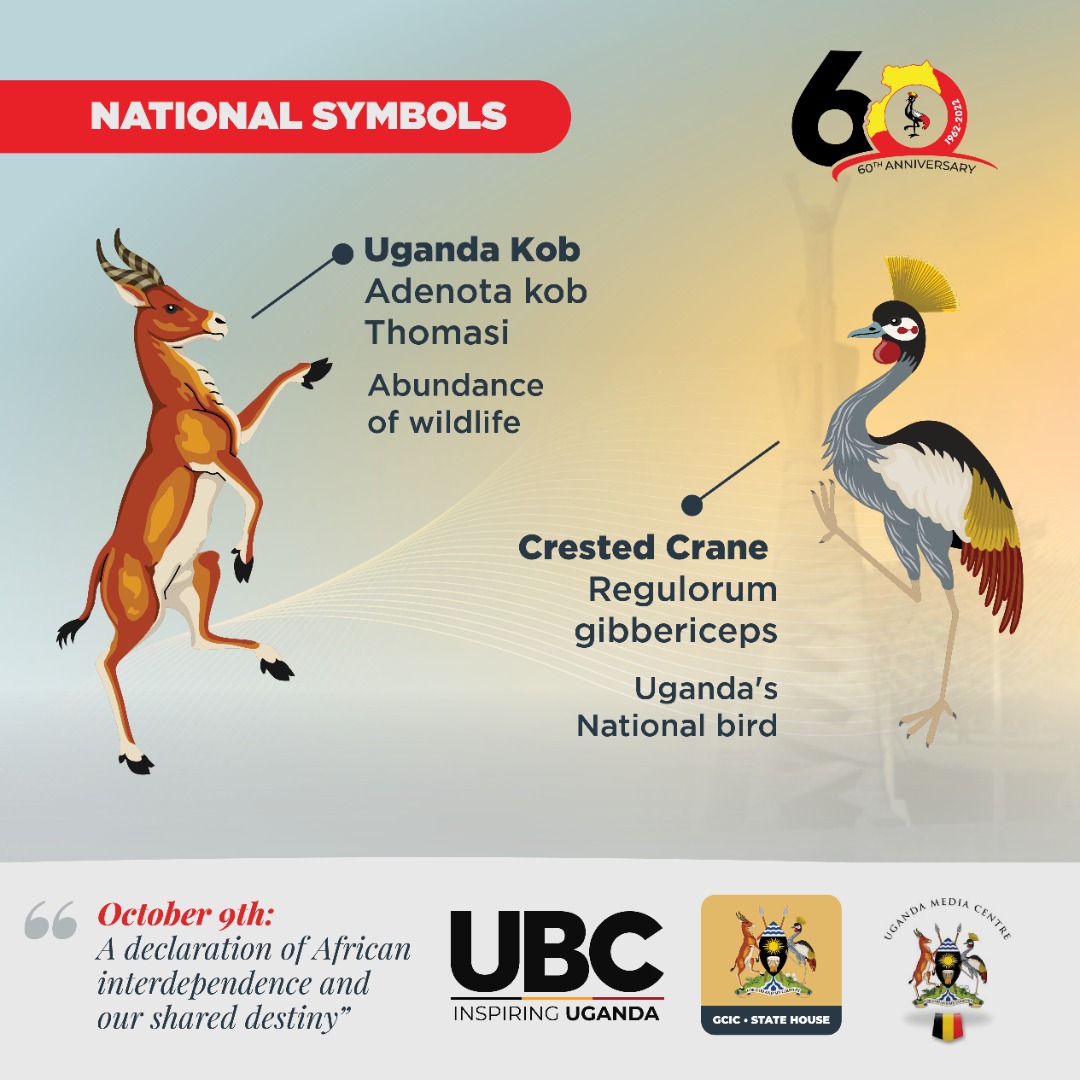
- Crested Crane (right side): This beautiful bird is a subspecies of the grey-crowned crane (Balearica regulorum gibbericeps) and serves as Uganda’s national bird.
Adored for its gentle demeanor, the bird features on the Uganda National flag as well with its colors serving as inspiration for the black, yellow and red colors which adorn the flag.
- Ugandan Kob (left side): The Ugandan kob (Kobus kob thomasi) is a subspecies of kob, a type of antelope native to the region. This animal represents the abundant wildlife that thrives in Uganda’s various national parks and wildlife reserves.
The Green Mound and River Nile
The shield along with the animals on either of its sides stand on a green mound, representing Uganda’s fertile land which supports Agriculture the main economic activity in the country.
Running down the center of the green mound is a representation of the River Nile, the world’s longest river, which begins its 6,650-kilometer journey from Uganda, specifically from Lake Victoria.
Cash Crops: Coffee and Cotton
On either side of the Nile’s representation are sprigs of Coffee and Cotton, Uganda’s two main cash crops at the time of independence. The coffee plant appears on the left side, while cotton is shown on the right. These crops represent Uganda’s agricultural economy and the importance of farming to the nation’s prosperity. While cotton production has decreased since independence, coffee remains a vital export crop for Uganda, contributing significantly to the national economy.
The National Motto: “For God and My Country”
At the bottom of the coat of arms is the Uganda’s national motto: “For God and My Country.” This powerful statement reflects the deeply held values of the Ugandan people, emphasizing faith in God and patriotic devotion to the nation.
The phrase “For God and My Country” has become an integral part of Uganda’s national identity, appearing not only on the coat of arms but also echoed in various aspects of civic life, including the national anthem. It serves as a reminder that national progress requires both spiritual foundation and practical commitment to the common good.
The Heraldic Description of the Uganda Coat of Arms
In formal heraldic language, the Uganda coat of arms is described as follows:
For arms, sable upon the fess point a sun in his splendour and in base a Uganda drum gold the skin and guy-ropes argent, a chief barry wavy of six azure and argent; behind the shield two Uganda spears of estate crossed in saltire proper; and upon a compartment representing a grassy mound down the centre of which flows a river between in dexter a sprig of coffee and in sinister a sprig of cotton, both leaved and fructed proper, for supporters, on the dexter side a male Uganda kob proper and on the sinister side a crested crane likewise proper; together with this motto, FOR GOD AND MY COUNTRY.
Significance and Modern Usage of the Uganda Coat of Arms
The Uganda coat of arms serves multiple important functions in modern Uganda, extending far beyond mere decoration. As stipulated in Article 8 of the 1995 Constitution of Uganda, the coat of arms is one of the official national symbols of the country.
Official Applications of the Uganda Coat of Arms
Unlike the national flag, which can be used by any citizen, the Uganda coat of arms is restricted to official government use. It appears on:
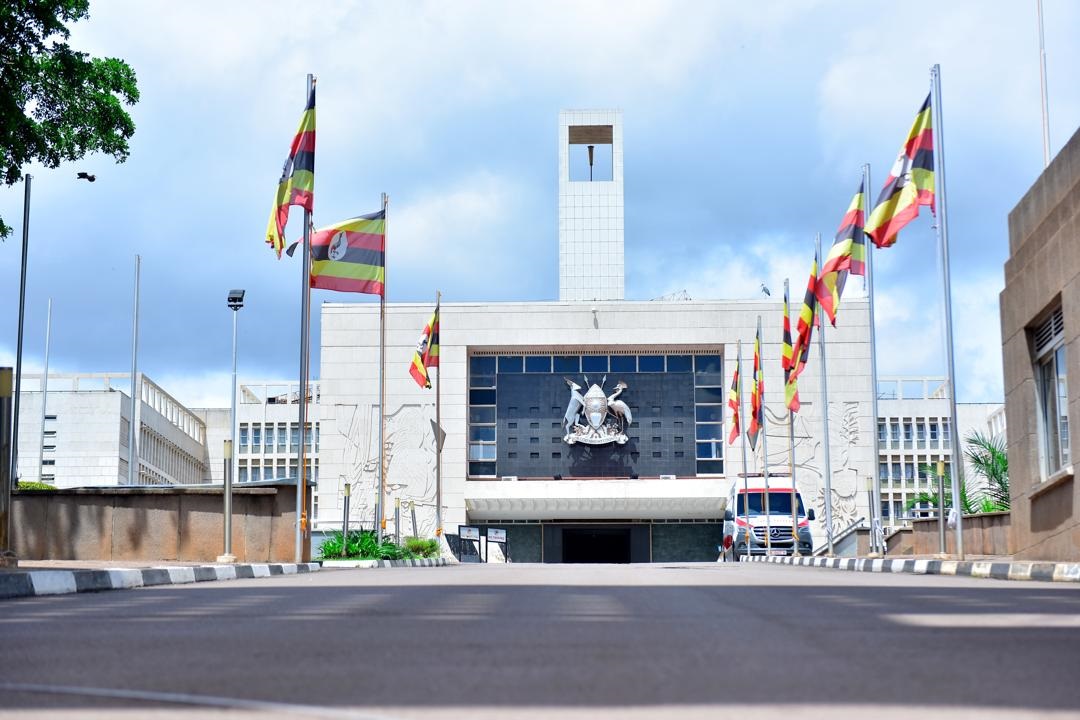
- Government buildings, including Parliament, judicial chambers, State House, and all ministry offices
- Official government documents, certificates, and correspondence
- Ugandan passports and other travel documents
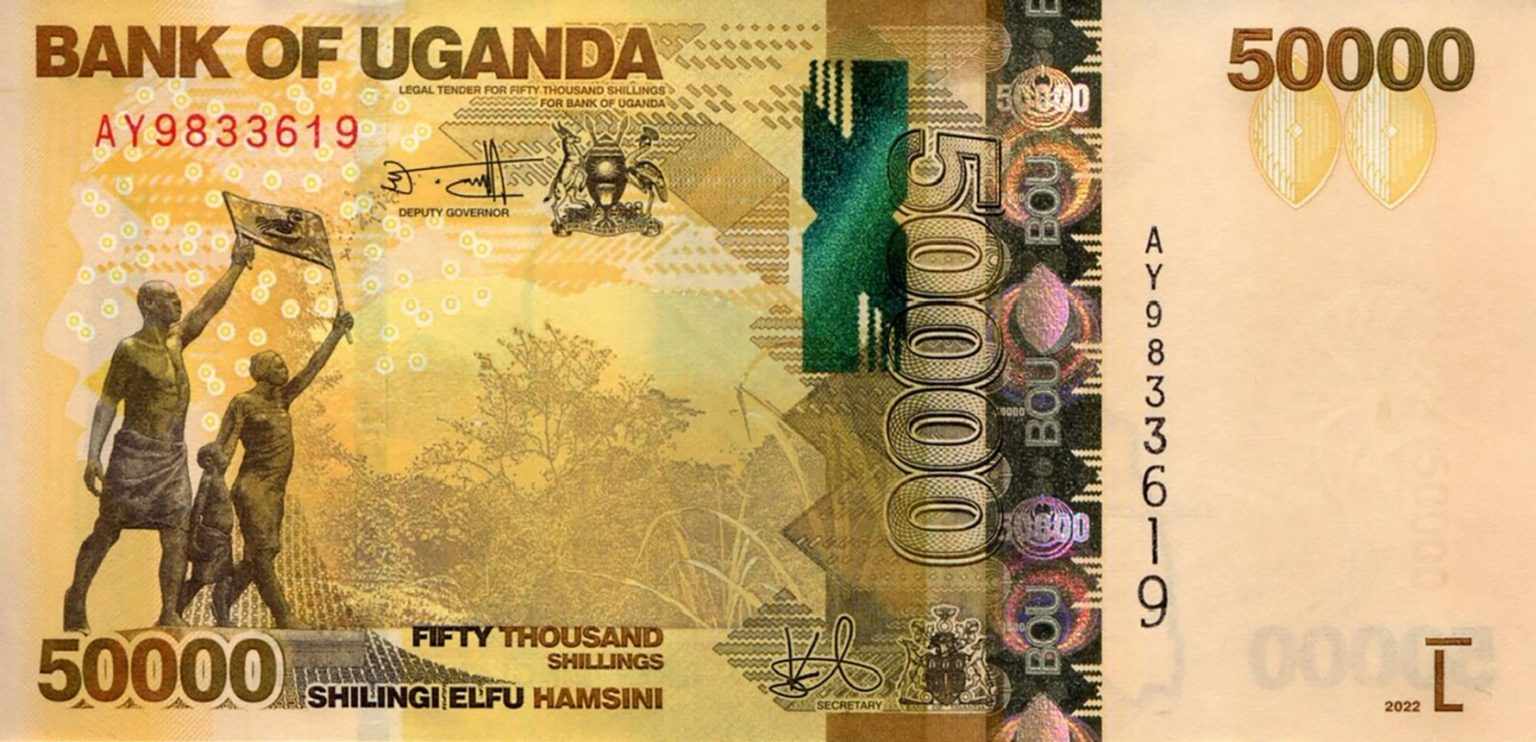
- National currency (Ugandan shillings)
- Military uniforms and insignia
- Presidential seals and state ceremonial items
- Court seals and legal documents
Historical Controversies and Changes asscociated with the Uganda Coat of Arms
Apollo Milton Obote’s Military Raid of Buganda
During the 1966 national crisis, when Prime Minister Milton Obote launched a military attack on King Edward Mutesa II of Buganda, who was serving as Uganda’s ceremonial president, the interpretation of some symbols on the Uganda Coat of arms was altered. Most notably, the official explanation of the drum’s symbolism was changed from representing royalty and the authority of Uganda’s kings to simply symbolizing dancing and the summoning of people to meetings and ceremonies.
This change reflected the political tensions of the era and Obote’s abolition of the traditional monarchies in Uganda. Before 1966, kings and chiefs in different kingdoms were fully recognized under the constitution and enjoyed relative political autonomy. The reinterpretation of the drum’s symbolism was seen by many as an attempt to diminish the historical importance of Uganda’s traditional kingdoms.
Differences Between the Original and Current Design of the Uganda Coat of Arms
The original coat of arms design by Professor Cecil Todd, measuring 130cm by 120cm, differs from the version currently in circulation. Most notably, Todd used sky blue rather than the ocean blue now commonly seen as a representation of the Nile Waters. There are visible differences in the sun symbol plus color as well as the drum design. The original artwork remains stored in the Makerere Art Gallery, though art historians have called for it to be displayed more prominently at the Uganda Museum or National Gallery for public access and preservation.
The Coat of Arms in Uganda’s Constitution
The 1995 Constitution of Uganda formally recognizes the coat of arms as one of the nation’s official symbols. Article 8 of the Constitution specifically addresses national symbols, giving constitutional protection to the coat of arms and establishing its official status in Ugandan law. This constitutional recognition ensures that the coat of arms maintains its place as a permanent symbol of the Ugandan state, protected from arbitrary changes and recognized across all government institutions.
Comparing the Uganda Coat of Arms to Other National Symbols
While the coat of arms is distinct from Uganda’s other national symbols, it shares common themes and elements with them, particularly the national flag and national anthem.
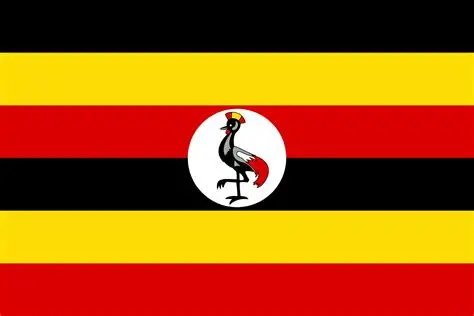
The national flag, designed by Grace Ibingira and adopted on the same day as the Uganda Coat of Arms, features six horizontal stripes of black, yellow, and red, with a white circle in the center containing the crested crane. The colors represent African people’s skin color (black), Africa’s sunshine (yellow), and African brotherhood through shared blood (red). The crested crane appears on both the flag and the coat of arms, providing visual continuity between these important national symbols.
The national anthem, “Oh Uganda, Land of Beauty,” composed and written by Prof. George Wilberforce Kakoma, echoes the motto found on the Uganda Coat of arms. The anthem’s opening line, “Oh Uganda! May God uphold thee, We lay our future in thy hand,” reflects the same spirit of faith and patriotism expressed in the motto “For God and My Country.”
Conclusion
The Uganda coat of arms stands as a timeless emblem of national pride, unity, and identity. From its adoption in 1962 to the present day, this carefully crafted heraldic symbol has represented Uganda on the world stage, appearing on official documents, government buildings, and serving as a constant reminder of the nation’s values and aspirations.
Planning a trip to Africa? Explore our expertly curated tour packages to experience the incredible wildlife, stunning landscapes, and warm hospitality that make Uganda truly the Pearl of Africa.
Interested in what else Uganda has to offer, check out the rest of our travel guides: