Languages of Uganda: A Complete Guide to What Language is spoken in Uganda? (2025)
What language is spoken in Uganda?
Uganda is a multi-lingual country with over 40+ languages located in East Africa bordering Kenya, Tanzania, Rwanda, Republic of South Sudan and the Democratic Republic of Congo.
The two official languages of Uganda are English and Swahili, though the most widely spoken indigenous language is Luganda.
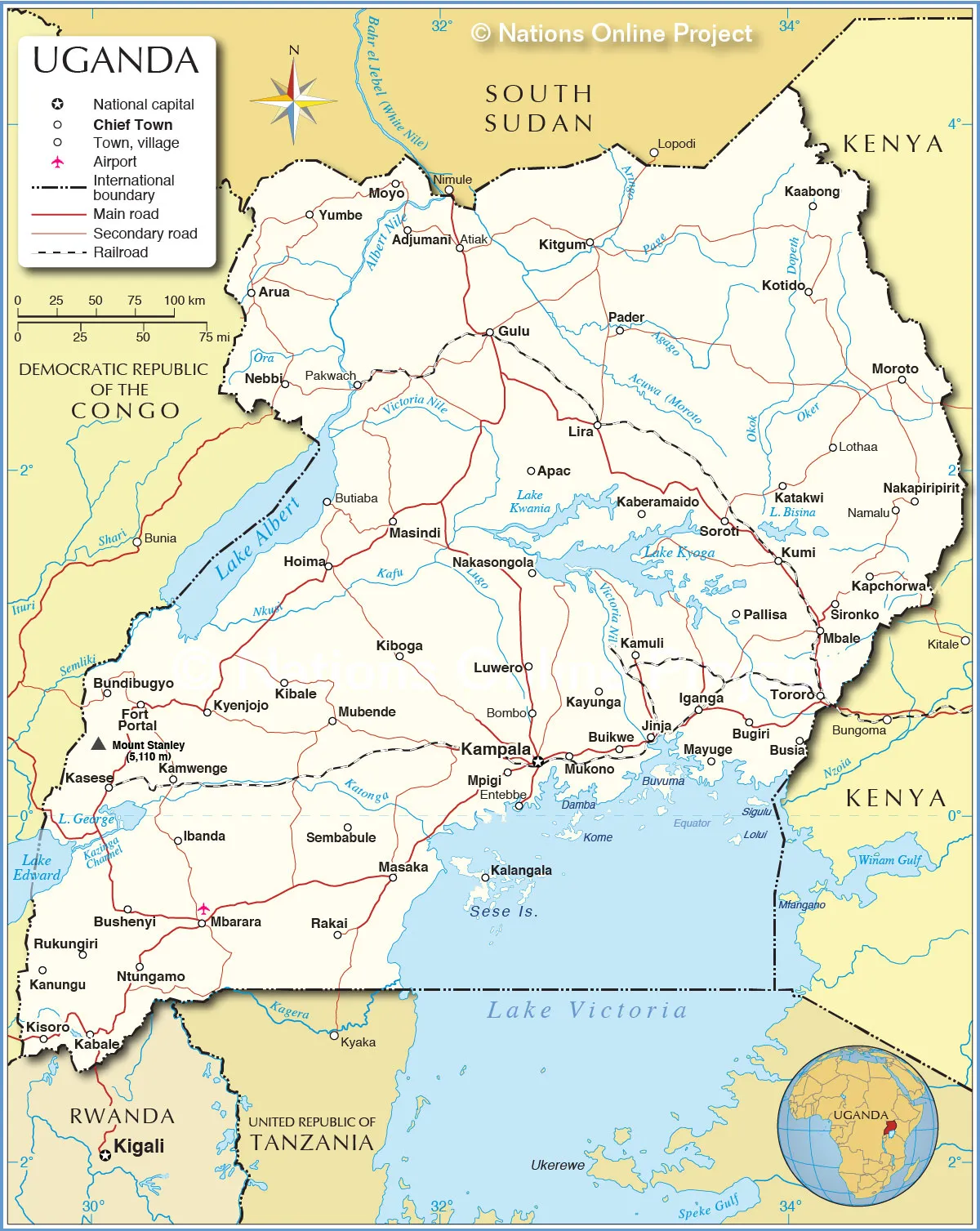
Upon landing in Uganda you’ll realize that English is reserved for most formal places such as government offices, courts of law and education. Luganda and Swahili on the other hand are used in most day to day settings.
What is the official language of Uganda?
English and Swahili are the two official languages of Uganda.
English: Uganda’s Primary Official Language
English has been Uganda’s official language since the country gained independence from Britain in 1962. As a former British colony, Uganda adopted the UK-style of English which is widely used in:
- Government offices
- Education institutions at all Primary, Secondary and Tertiary levels
- Places of Business
- Media and Broadcasting
- Legal proceedings in Courts of law
Approximately 45% of Uganda’s urban & educated population speaks English making it the most practical language for visitors.
Throughout your conversation with local people, you’ll notice that they speak a certain kind of English that a native English speaker would call grammatically incorrect. We’ll look at the common day-to-day phrases which use this kind of English and what they are meant to communicate later on in the article.
Swahili: Uganda’s Second Official Language
Swahili (also called Kiswahili) became Uganda’s second official language in 2005. While not as widely spoken as English and Luganda, it is meant to serve as a unifying language between the East African people. Swahili is widely spoken in Uganda’s neighboring countries of Kenya, Tanzania and Democratic Republic of Congo. In these 3 countries, Swahili is recognized as an offical language. Swahili is also widely used amongst military and police personnel.
As of 2017, Swahili is a mandatory subject taught in many Ugandan secondary schools however its yet to be adopted and used widely in day to day conversations.
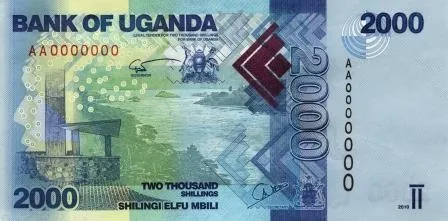
Luganda: The most widely spoken local language
While not an official language, Luganda is the most commonly spoken indigenous language in Uganda, with over 65% of the population able to speak or understand it.
Where is Luganda spoken in Uganda?
Luganda is the native language of the Baganda people, Uganda’s largest ethnic group, and is predominantly spoken in:
- Central Region (including Kampala, the capital city)
- Urban centers throughout the country
- Most areas frequented by tourists
Why is Luganda a dominant language in Uganda?
The historical influence of Uganda’s oldest kingdom, the Buganda Kingdom and Kampala’s location in the Central Region have made Luganda the most geographically spread indigenous language in Uganda.
Should tourists visiting Uganda learn Luganda?
Yes, we highly recommend learning basic Luganda phrases before your trip for the following reasons:
- Universal understanding - You’ll find Luganda speakers in every region of Uganda
- Cultural connection - Locals genuinely appreciate foreigners who make the effort to learn their language
- Better experiences - Opens doors to deeper cultural interactions
- Practical Benefits - Helps with bargaining in markets and when using public transport if you’re considering long term stay
Foreigners tend to be overcharged when buying things, by knowing a bit of conversational Luganda, you’re less likely to pay for goods and services at an inflated price.
- Language similarities - Many Ugandan languages share similarities with Luganda, making it easier for non-Luganda speakers to understand you
Even if your accent isn’t perfect, Ugandans are incredibly friendly and will appreciate your effort to speak their language
Interested in learning Luganda, reach out to us and we’ll get you in touch with a personal translator.
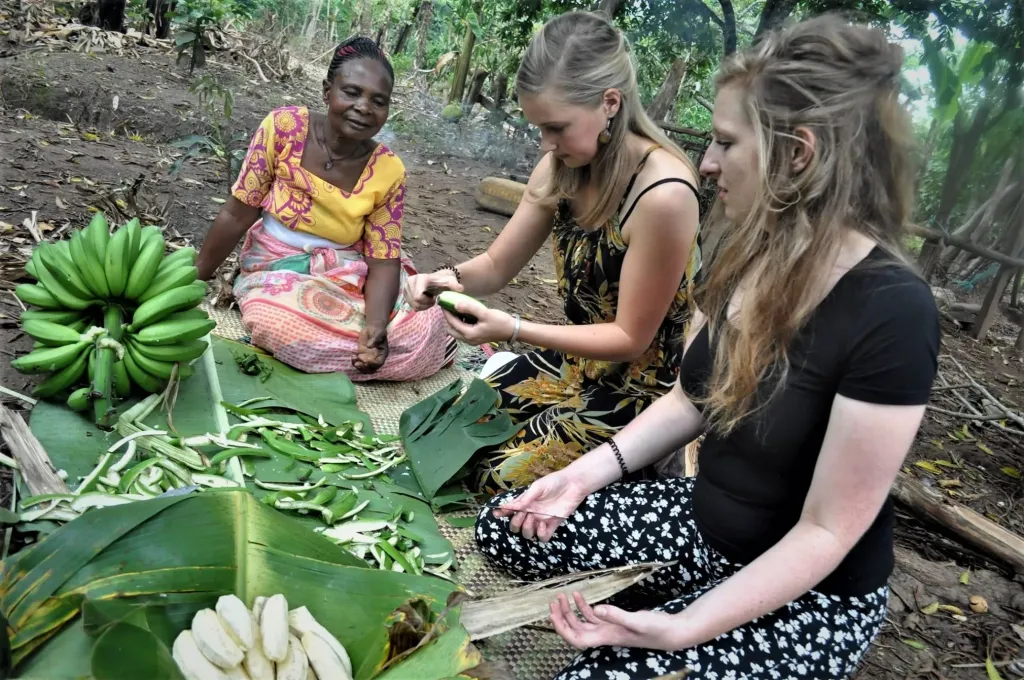
Other Major Languages spoken in Uganda
Uganda is home to more than 40 indigenous languages which fall into 4 major language families.
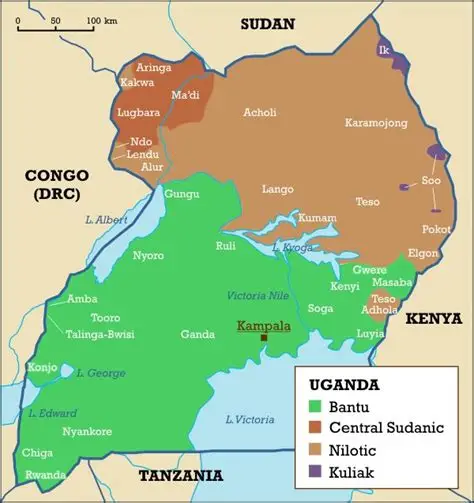
1. Bantu Languages (Central, Western and Southern Regions)
The majority of Ugandans speak Bantu languages which include:
- Luganda - 4+ million speakers (Central Region)
- Runyankole-Rukiga - Spoken in southwestern Uganda by the Banyankole and Bakiga people
- Lusoga - Spoken in eastern Uganda, very similar to Luganda
- Rutooro - Tooro Kingdom, western Uganda
- Runyoro - Bunyoro Kingdom, western Uganda
- Lumasaba - Eastern Uganda, Mount Elgon region
These languages are fundamentally similar to each other and if you speak one, you’ll be able to understand what is meant to be communicated in the rest of the languages.
2. Nilotic Languages (Northern and Eastern Uganda)
Northern and Eastern Nilotic languages include:
- Acholi - Northern Uganda (Gulu, Kitgum)
- Lango - North-eastern Uganda
- Ateso - Eastern Uganda (approximately 3.2 million speakers, 9.6% of population)
- Karamojong - North- eastern Uganda (370,000 speakers)
- Alur - Northwestern Uganda (459,000 speakers)
3. Central Sudanic Languages (Northwestern Uganda)
Spoken in Uganda’s northwestern corner:
- Lugbara - West Nile region
- Ma’di - Northwestern border areas
- Aringa - Northwestern Uganda
4. Kuliak Languages (Far North-eastern Uganda near the Kenyan border)
Small language groups in remote north-eastern areas of Uganda:
- Ik - Near the Kenya border
- Soo - Endangered language with few remaining speakers
Essential Luganda Phrases Every Traveler Planning to Visit Uganda Should Know
Learning these basic Luganda phrases will significantly enhance your experience in Uganda:
Daily Greetings
| English | Luganda | Pronunciation Notes |
|---|---|---|
| Good morning Sir/Madam | Wasuze otya Ssebo/Nyabo | wa-SOO-ze oh-CHA |
| Good afternoon/evening | Osiibye otya | oh-see-BYE oh-CHA |
| Good night | Sula bulungi | SOO-la boo-LOON-gee |
| How are you? | Oli otya? | oh-lee oh-CHA |
| Hello/Hi | Gyebaleko | gye-ba-LEH-ko |
Essential Phrases
| English | Luganda | Usage Context |
|---|---|---|
| What is your name? | Amanya go yegwe ani? | Meeting new people |
| My name is... | Nze... | Introducing yourself |
| Thank you | Weebale | Everyday gratitude |
| Thank you very much | Weebale nnyo | Extra appreciation |
| Please | Bambi | Polite requests |
| Sorry | Nsonyiwa | Apologizing |
| Yes | Yee | Affirmative response |
| No | Nedda | Negative response |
| Where are you from? | Osibuka wa? | Conversations |
| He/she is my friend | Oyo mukwano gwange | Introductions |
Travel & Shopping
| English | Luganda | When to Use |
|---|---|---|
| How much is this? | Kino ekintu kyassente mmeka? | Shopping at markets |
| Where is the shop? | Edduka liri wa? | Finding stores |
| Can you help me? | Ondagililako | Asking for assistance |
| Have a safe journey | Tambula bulungi | Farewells |
| Happy birthday | Amazalibwa amalungi | Celebrations |
Pro tip: Don’t worry about perfect pronunciation. Ugandans are among the friendliest people you’ll meet and will appreciate any effort to speak their language, regardless of your accent.
Understanding Common Ugandan English Expressions
In the day to day, Ugandans speak a kind of English made up of phrases that may sound grammatically incorrect to the native English speaker. These common phrases are often associated with entirely different meaning than what is expected by native English speakers. Common expressions you’ll encounter that belong to this category of English include the following:
| English Expression | Intended Meaning | Usage Context |
|---|---|---|
| Extend | Make way or move aside | “Please extend so I can pass.” |
| Balance | Change(Money returned from a Purchase) | “Balance please” = “Can I have my change?” |
| I need to make a short call | I need to use the bathroom (Not a phone call!) | Let me go make a short call |
| Now-now | Urgently, right away | “We need to leave now-now!” |
| Slowly-slowly | Be patient, take your time | “Slowly-slowly, we will arrive.” |
| Are we together? | confirm someone is following your explanation | Are we together on this subject? |
| Putting on | Wearing(clothing!) | She's wearing a blue dress |
| Pop | Come, bring, or stop by | “Pop to my house” = “Come to my house” |
| Special hire | Private taxi | Let us board a special hire to Kampala |
| Bodaboda | Motorbike | I took a Bodaboda to Kampala |
| Campuser | University student | He is dating a campuser |
| Eating money | Embezzling or spending lavishly | Let me eat my money in peace! |
| Where is home? | Inquire about place of residence | Home is in Jinja |
Understanding these expressions will help you navigate conversations with locals more easily and avoid confusion!
Language Tips for Tourists.
Urban Areas:
- English is widely spoken
- Basic Luganda greetings are appreciated and delighted upon
- Many people are multi-lingual, speaking 2 to 4 languages at a time
- Boda boda riders - May know limited English. Important to learn basic directions if you are to use them
Rural areas (most safari activities are conducted in these areas)
- Local languages dominate
- English speakers are fewer
- Tour guide or interpreter is needed.
If you book a safari with us, tour guides are provided by the company as part of the itinerary at NO extra cost.
- Basic greetings in the local language could be important as well.
When to use Luganda, English or Swahili
English:
- Hotels, restaurants, tour operators
- Official business, banks, government offices
- Written communication
- Professional settings
Luganda:
- Markets and street vendors (better prices!)
- Local transportation (matatus, bodabodas)
- Cultural sites and village visits
- Casual conversations with locals
Swahili:
- Border areas (especially near Kenya and Tanzania)
- With East African expats
- Police and military interactions
- Some tourist areas
Learning Luganda: Resources and Difficulty
Is Luganda Hard to Learn?
No, Luganda is not difficult to learn. With dedicated study and practice, you can achieve conversational proficiency in 3-6 months.
What makes Luganda relatively easy:
- Phonetic pronunciation - Words are pronounced as written
- No gendered nouns - Unlike French, Spanish, or German
- Regular patterns - Consistent grammatical structures
- No tones - Unlike some African languages (though it has pitch accents)
- Friendly speakers - Ugandans eagerly help learners practice
How to Learn Luganda
Before Your Trip:
- Download language apps - Duolingo, Memrise, or specialized Luganda apps
- YouTube videos - Free lessons from native speakers
- Phrasebooks - Carry a pocket guide for quick reference
You can learn basic Luganda conversational phrases by downloading our free learn luganda pdf
- Online tutors - Schedule virtual lessons with Ugandan teachers
During Your Trip:
- Practice daily - Use phrases with vendors, drivers, hotel staff
- Ask locals - Ugandans love teaching visitors their language
- Immersion - Stay with local families or in homestays
- Take notes - Keep a journal of new words you learn
Need a personal translator? Contact us to be connected with professional translation services for your trip, whether you need ongoing lessons or assistance during your safari trip.
Planning Your Trip to Uganda: Language Preparation Checklist
Weeks Before Your Trip
- Download Our Free Learn Luganda phrasebook or language app
- Learn basic greetings in Luganda
- Practice pronunciation with YouTube videos
- Consider booking a pre-trip language lesson
1 Week Before Your Trip
- Review essential phrases daily
- Create a pocket reference card with key phrases
- Test your knowledge with language apps
- Watch videos about Ugandan culture and etiquette
Upon Arrival
- Practice greetings with airport staff
- Ask your driver or guide to teach you phrases
- Use Luganda at markets and restaurants
- Don’t be shy. Ugandans appreciate the effort!
Frequently Asked Questions about Languages in Uganda
What language is spoken in Uganda schools?
English is the primary language spoken and taught in most Ugandan schools. Since 2005, Swahili is a mandatory language taught in Ugandan Secondary Schools. Select schools throughout the country teach other languages like German, French and Swahili as optional languages.
Should I learn some Luganda before visiting?
While not mandatory, learning basic Luganda phrases is highly appreciated by the locals and can enhance your cultural experience and exhibit your respect for Ugandan culture especially in Central Uganda and Kampala, the capital city of Uganda.
What percentage of Uganda speaks English?
Approximately 45% of the total Ugandan population speaks English with higher comprehension and proficiency amongst urban dwelling and educated Ugandans.
What are the top 3 languages spoken in Uganda?
Luganda, English and Swahili are the top 3 languages spoken in Uganda
Do they speak Spanish in Uganda?
No. Spanish is not spoken in Luganda. English, Luganda and Swahili are the main languages spoken in Uganda
Does Uganda speak french?
No. French is not spoken in Luganda. English, Luganda and Swahili are the main languages spoken in Uganda
Is Swahili widely spoken in Uganda?
Not as widely as in Kenya or Tanzania. While it’s an official language, most Ugandans primarily use English or their native language. Swahili usage is increasing among younger generations as it’s now mandatory in schools.
What does “Muzungu” mean?
“Muzungu” is a Swahili term commonly used across East Africa to refer to foreigners or white people. It’s not derogatory and you ought to embrace it with a smile as a friendly acknowledgment of your presence.
What language do they speak in Kampala, Uganda?
Kampala, located in the Central Region, is primarily a Luganda-speaking city. However, English is widely used in business and tourism, and you’ll hear many other languages due to the city’s diverse population.
Why don’t most Ugandans speak Swahili?
It’s a language mostly used by and reserved for military personnel.
How many languages does Uganda have?
Uganda has over 40 indigenous languages owing to its diverse culture.
What kind of English do Ugandans speak?
United Kingdom/ British English is the kind of English spoken in Uganda because it was colonized by Britain.
Is Kiswahili a compulsory subject in Ugandan schools?
Yes. Kiswahili is a compulsory subject in Ugandan schools starting in 2017 by the National Curriculum Development Center.
What are the top 3 languages spoken in Uganda?
English, Luganda and Swahili are the top 3 languages spoken in Uganda
What is thank you in Luganda?
Weebale
What does bambi mean in Uganda?
Bambi means please
How do you say sorry in Uganda?
Nsonyiwa
Is Luganda hard to learn?
No. Luganda is not hard to learn and could be mastered in a period of 3 to 6 months with dedicated study and practice effort.
Is English a mother tongue in Uganda?
No, English is not a mother tongue in Uganda. Some example of mother tongues in Uganda include Luganda(most popular and widely spoken), Runyankole-Rukiga, Ateso, Lusoga, Langi, Acholi.
What is the second most commonly spoken language in Uganda?
Luganda is the second most commonly spoken language in Uganda after English.
How many languages are spoken in Uganda?
Uganda has over 40 living languages with the exact number varying depending on how each of the languages are classified. Since most languages are similar to one another with words and phrases cutting across, the number may be considered less than 40 if related languages are clasiffied together.
How to learn Luganda language?
You can learn basic conversational phrases by downloading our free learn luganda pdf. In case you want to go deeper, reach out to us and we’ll get you in touch with a personal translator.
Is Luganda a morphologically rich language?
Luganda aka Ganda is a morphologically rich and low resource language from Uganda.
Is Luganda a Bantu Language?
Yes. Luganda is a Bantu language spoken by people from Uganda
Is Luganda a tonal language?
Yes, Luganda is a tonal langugae
Is Luganda more difficult than English?
No, Luganda is not more difficult than English.
What language does Buganda speak?
People from Buganda, the Baganda speak Luganda as their main language.
How many people speak Luganda?
Approximately 45% people in Uganda speak Luganda
Do Buganda people speak Swahili?
Yes. Buganda people are multi-lingual speaking other languages such as Swahili in addition to Luganda.
How do you say a greeting in Luganda?
Good morning translates to Oli Otya while Good afternoon and Good evening translate to Osiibye Otya
Where in Africa is Uganda located?
Uganda is located in the Eastern part of Africa
Where is Uganda located in Africa?
Uganda is located in East Africa bordering Kenya, Tanzania, Rwanda and the Democratic Republic of Congo
Uganda is in what part of Africa?
Uganda is in the Eastern part of Africa
Is Uganda in Africa?
Yes. Uganda is located in East Africa.
What is the location of Uganda?
Uganda is located in the Eastern part of Africa next to Kenya.
While Uganda may seem to have so many local languages and dialects, by focusing on just Luganda for your trip when visiting Uganda, you can never go wrong. If you’re ready to dive in, download our free learn basic Luganda pdf to learn the popular Luganda phrases you ought to know.
For more essential travel information, check out our other travel guides:
- Everything You Need to Know When Applying for the Ugandan Travel Visa
- Where is Uganda Located in Africa
- What Currency is used in Uganda
- History, Design and Meaning behind the Uganda Flag
- History, Design and Symbolism behind the Uganda Coat of Arms
- A Guide to the Composition and Structure of the Uganda Nationa Anthem
- Complete Guide to Ugandan Time, Timezone and comparison with major cities around the world
Planning Your Trip to Uganda?
Now that you understand all there is to know about the most popular language of Uganda, the Luganda, you’re better suited for a visit to Uganda. Browse our itineraries or contact us to start planning your adventure to Uganda.